A lush, river-bound corner of Namibia, the Caprivi Strip offers a striking watery contrast to the country’s deserts, with wildlife-rich rivers, excellent birding and several reserves that rewards unrushed exploration.
Officially renamed the Zambezi Region, the Caprivi Strip remains Namibia’s most distinctive, riverine landscape – a watery contrast to the rest of this desert country. This narrow “outstretched arm” reaches eastwards towards the Chobe National Park of Botswana and the Victoria Falls. Indeed it ends at the only spot on the planet where four countries meet, (Namibia, Zambia, Zimbabwe and Botswana), close to the Victoria Falls.
Here, broad rivers replace dunes, and floodplains, papyrus swamps and riverine woodland dominate the scenery. It feels closer in spirit to northern Botswana than to much of Namibia — greener, wetter and alive with birdlife and large mammals drawn to permanent water.
How Long to Allow for the Caprivi Strip?
This is not a region to rush. The Caprivi is long, linear and made up of several distinct ecosystems, all connected by a good tarred road with secondary gravel roads to lodges. So you need a minimum of 4–5 nights from Etosha to Katima Mulilo, and ideally longer.
This allows enough time to transform the Caprivi Strip from a transit corridor into one of Namibia’s most rewarding safari regions.
Wildlife Corridors and River Safaris: A Journey Through Caprivi’s Game Reserves
Bwabwata National Park (Mahango & Buffalo) near Divundu
Entering the Caprivi from the Etosha side, Bwabwata National Park forms the transition from Namibia’s dry interior to its river-fed northeast. However this is divided into several ‘core’ areas, previously individual reserves. The Mahango area, along the Okavango River, is compact and scenic, with excellent elephant, buffalo, roan and sable antelope.
Further east, the Buffalo Game Reserve is wilder and less visited, characterised by open woodland and seasonal floodplains. Together, these areas provide an excellent introduction to the Caprivi’s changing landscapes. Ideally allow 2 nights to allow time for wildlife-viewing.
Kwando River & Mudumu National Park (Allow 2-3 nights)
The Kwando River is the wildlife heart of the Caprivi. This permanent waterway supports large herds of elephant and buffalo, along with lion, leopard and abundant birdlife. The nearby Mudumu National Park protects key wildlife corridors and contributes to the region’s unfenced, cross-border ecosystem.
Safaris here often combine game drives with boat-based activities, offering a varied and immersive experience that feels genuinely wild, and far quieter than similar regions in Botswana, just over the border.
Nkasa Lupala National Park lies in the far south of the Caprivi and is one of Namibia’s most remote protected areas. During the wet season it becomes a mosaic of islands, channels and floodplains, sharing its ecology with Botswana’s Linyanti swamps, (but at a fraction of the price).
This is a seasonal landscape best suited to experienced safari travellers who value wilderness and exclusivity over predictability.
Zambezi River (1-2 nights)
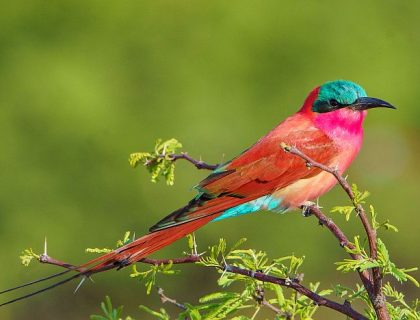
Red bird holding an insect in its beak. Golden hour sunlight. Caprivi floodplains, Cuando river, Namibia.
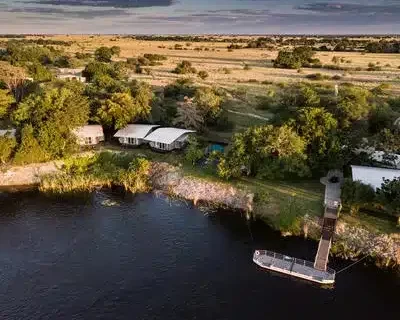
At the eastern end of the Caprivi, the Zambezi River offers a gentler, more relaxed conclusion to the journey. Lodges here focus on river activities such as boating, fishing and excellent birding including the Southern Carmine bee-eaters in season. See Zambezi Mubala Lodge
How to Travel & Onward Travel into Botswana and Victoria Falls
While access has improved with flights from Windhoek to Katima Mulilo, this remains a region best suited to self-drive travellers passing through villages, rivers and wildlife areas en route.
We recommend that you drop your rental car at Katima and fly back to Windhoek. Or continue by road transfer to Chobe National Park (1.5 hours) or Victoria Falls (3 hours)
The Caprivi Strip can be explored via road transfers from Katimo, Victoria Falls or Chobe. But please note that a guided trip combined with the rest of Namibia will have a hefty price tag.
Frequently Asked Questions about the Caprivi Strip
How long should I allow to visit the Caprivi Strip?
The Caprivi Strip is longer and more varied than most people expect. We recommend a minimum of 4–5 nights, with 6–8 nights ideal if you want to explore multiple river systems and reserves at a relaxed pace.
Is the Caprivi Strip suitable for first-time visitors to Namibia?
It can be, but it’s usually better suited to 2nd or 3rd-time visitors. Or those combining Namibia with Chobe or Victoria Falls. The distances are significant, and the region rewards those who’ve got time.
Is the Caprivi Strip similar to Botswana’s Chobe or Linyanti?
In landscape and wildlife, there are similarities — especially along the Kwando and Zambezi rivers. However, the Caprivi is generally quieter and less developed, and usually much less expensive (as it’s priced in Namibian Dollars)
Do I need to self-drive to explore the Caprivi Strip?
Self-driving is probably the best way to explore the region, particularly if travelling from Etosha. However, it’s also possible to fly into Katima Mulilo (or Kasane) and stay at one or two river lodges, using road transfers, if your time is limited.
When is the best time to visit the Caprivi Strip?
The dry season from June to September offers the best overall wildlife viewing, as animals concentrate along the rivers. The green season (December to March) is hotter and wetter but excellent for birding and scenery. We recommend April or May as a good sweet spot between the two.
Speak to our specialists about combining the Caprivi Strip with Etosha, Chobe or Victoria Falls.
Why We Love It
A dramatic contrast to Namibia’s arid landscapes
Nearly 450 bird species — around 70% of Namibia’s total, and over a quarter of which are endemic to the Caprivi Strip
Namibia’s only population of hippopotamus
Diverse safari experiences combining land and water
Seamless onward links to Chobe National Park and Victoria Falls
Watery-based game-viewing similar to Botswana, but at Namibian – much lower – prices.
On The Map
When to visit Caprivi Strip (Zambezi Region)
Green Season - Summer Rainfall
This is the summer rainy season so it’s green and lush. Hot and humid, with afternoon rains that transform the landscape. Excellent for birding and newborn wildlife. Temperatures are high at 31C but drop after the late afternoon rains. Slightly less rainy in March.
Still lush, with improving game viewing as grasses recede. Clearer skies and beautiful light lead to superb sunsets. The game-viewing gets better as the dry season continues.
The best overall game viewing, as animals congregate along rivers. The dense bush thins out, and the animals are easier to find. Daytime temperatures are 27-28C but the nights are quite cold (7C)
Temperatures rise sharply, especially in October prior to the rains and it gets humid! Wildlife remains concentrated near water, but heat can be intense before the rains return. Expect at least 35C and sometimes more. So make sure you are comfortable with heat if you travel in October. Somewhere in November, the summer rains start taking the form of late afternoon showers.