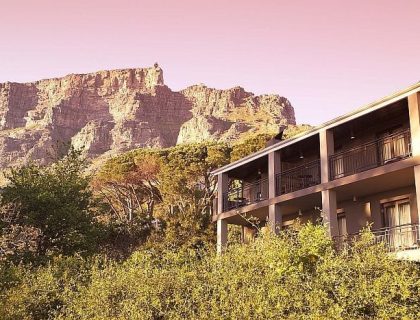
Table Mountain rises over a city where oceans, history, and culture meet. From penguins and mountain trails to art galleries and street markets, Cape Town is endlessly diverse — a place that feels both iconic and yet intimate.
Few cities in the world rival Cape Town for sheer drama. Cradled by Table Mountain and wrapped by two oceans, it’s a place of crashing breakers, colonial architecture, café-lined streets and glorious sunsets. We never tire of soaking up the beauty and buzzy atmosphere of this relaxed city.
Spend your mornings riding the Table Mountain cable car, perhaps hiking over to Maclear’s Beacon, and your afternoons sipping a glass of Constantia wine overlooking the vines.
Down below, Cape Town hums with life. Explore the Bo-Kaap’s bright facades, delve into contemporary African art at Zeitz MOCAA, or wander through Greenmarket Square, where the city’s craft market tradition, and gaggling, still thrives. And when the sun dips, head to one of Cape Town’s world-class restaurants. Or follow the scent of wood-fired grills and the call of live jazz to one of its many more relaxed eateries.
Different Neighbourhoods of Cape Town
Cape Town isn’t just one destination — it’s a collection of neighbourhoods, each with its own rhythm and personality.
V&A Waterfront - Bright, breezy, and always buzzing. A lively mix of shopping, dining, and working harbour life beneath Table Mountain’s gaze.
City Centre - A walkable blend of culture, history, and café life, framed by museums, art galleries, the colourful Bo-Kaap, and the leafy Company’s Garden.
City Bowl - basks in the dramatic shadow of Table Mountain, its leafy suburbs brimmed with boutique hotels, eateries, and easy access to the city.
Constantia - The graceful, green heart of the Cape, where heritage wine estates, oak-lined avenues, and world-class restaurants create a slower rhythm.
Atlantic Seaboard - Palm-fringed beaches, champagne terraces and fiery sunsets in Camps Bay, Bantry Bay and Sea point.
Cape Peninsula - Cape Town’s wilder side where mountains, sea, and open space meet with dramatic coastal drives, white beaches & walking trails.
Each offers a slightly different experience, from city buzz to mountain calm — and our safari specialists will help you choose the perfect base for your stay.
As a city, Cape Town is somewhat unique in that other parts of the city and Cape Peninsula hold as much interest as downtown.
Take a boat to Robben Island, where Nelson Mandela spent 18 of his 27 imprisoned years.
Explore Cape Town’s wilder side: Follow the dramatic Chapman’s Peak Drive, one of the most scenic coastal roads in the world, to Cape Point then round out the day seeing the penguins at Boulders Beach
Visit Kirstenbosch Gardens, one of the planet’s most spectacular botanical spaces, with its serpentine sky walk, and contour path walking trails.
Spend a lazy afternoon at the beach at Camps Bay or Clifton.
Join a Cape Winelands tour, tasting your way through Stellenbosch and Franschhoek. Or stay closer to home with a tour or cycle ride through the Constantia wine estates.
And, for a deeper perspective, our guests often enjoy an uplifting Uthando Township visit, a responsible travel experience that connects you to Cape Town’s people and projects.
How many days do I need in Cape Town?
We recommend at least four nights to explore Table Mountain, the Peninsula, and the city’s main attractions — though a week allows you to enjoy it at a relaxed pace.
Is Cape Town good for families?
Absolutely. With beaches, aquariums, open-air markets, and wildlife encounters, Cape Town offers as much for children as for adults. Check out our two blog articles on Things to Do with Kids in Cape Town.
Can I combine Cape Town with a safari?
Yes, a safari is easily combined with a stay in Cape Town. But we’re not talking the ones very close to Cape Town. You can fly easily to the Kruger on a direct flight, or to the Malaria-free Eastern Cape safari lodges. Driving distance away there are good safari options like Sanbona (3 hours’ drive) or Gondwana (4-5 hours).
Discover Cape Town in your own style — talk to our team about where to stay and what to see in Africa’s most iconic city.
Why We Love It
Take the cable car up Table Mountain
Spend the day at one of Cape Town’s many beaches
Swim with the penguins
Helicopter flips over the peninsula
Enjoy a full day of interacting with whales and sharks by boat, with the option of caged shark diving
Restaurants, shops, craft markets galore at the V&A Waterfront & the city open air markets
Enjoy a sunset cruise along the Atlantic ocean by classic motorcycle and sidecar
Cape Town’s sunniest season — warm, dry days perfect for beaches and outdoor dining. Expect some wind, especially in January and February, but also glorious evenings for sunset drinks.
Cape Town has a dry Mediterranean climate, so this is the perfect time to visit. Being by the coast, Cape Town rarely gets unbearably. There is a slight micro-climate difference within the city depending on which side of the mountain you are staying.
One of our favourite times. The crowds ease, the air cools, and the queues at Table Mountain shorten. A wonderful time for sightseeing and food lovers.
it’s a great time to be active as the sun is not so hot. There are (slightly) fewer visitors so it’s easier to get into popular restaurants. Plus Cape Town hotels offer winter rates from May onwards, (sometimes shoulder rates in March & April).
Our winter is mild by Northern hemisphere standards, with rain on some days but plenty of crisp sunshine. Yes, you may have rain, but it only rains for 2-3 days every 10 days on average, so you may be lucky.
July sees the start of the whale-viewing season with whales sighted off the coast in False Bay. Plus there’s plenty to enjoy indoors – a rarity in South Africa – with museums. Art galleries including world-class Zeitz Mocaa museum.
Another favourite time to visit, unless you are seeking heat in a big way! Cape Town in bloom. Gardens burst into colour, and temperatures rise pleasantly. As it is not scorchingly hot, it’s a great time for hiking, sea-kayaking, or simply a first glass of rosé under a bright blue sky.
As elsewhere in the world, spring is variable. It could be sunny and warm. Or there could be late-season passing showers. By October onwards it tends to be warmer with beautiful displays of roses and indigenous fynbos.