Back in May, I had the good fortune of going on another Tanzania photographic safari in the northern regions. This time I was visiting outside of the peak season so I was keen to see how the safari experience differed. I was also going to Lake Natron, an area I had not seen before.
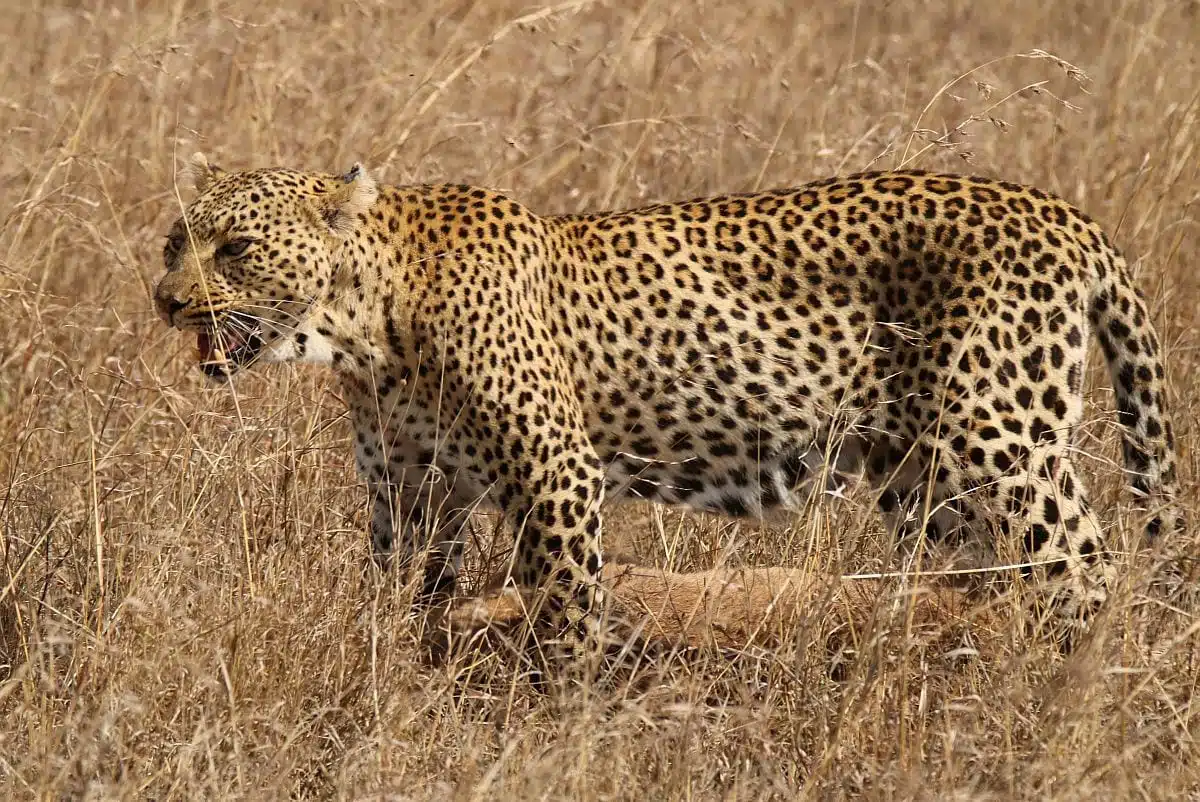
This is not a trip report discussing the relative merits of one safari camp over the other. Rather, it is a celebration of the wildlife of northern Tanzania. As I am not a very good photographer, I think it shows you just how good the sightings are – that even I was able to get some decent shots. (Note to self – don’t take so many portrait shots which cannot be displayed in a blog post!)
I will mention lodges and camps that I really enjoyed in passing. But I will also link you to our longer profile on each camp with my 1st-hand review – if you want more info.
Style of Safari
Our trip was primarily a road trip – but of the ideal type. We drove in, but flew out – a great way to do a Tanzania photographic safari.
This is my preferred style of safari – over a fly-in safari – as you get to see how the various regions relate to each other. You see the general countryside and not just the game reserves. It also has the added advantage of being a little less expensive, even for 2 people. And you have a private guide who gets to know you and what you are interested in. If you are four people or a family party, the differential is even greater.
Plus the airstrips are not necessarily close to all the camps. So even on a fly-in safari, there is still a fair amount of driving. And of course the flying days are naturally somewhat disjointed. So we recommend a fly-in safari when you are very tight on time and only want to see the top highlights. But if you have more time to spend, we recommend a drive-in safari.

Our vehicle was a classic East African safari vehicle – a modified land cruiser with 6 “window” seats, a pop-up roof for taking photos and a refrigerated cooler box in between the back seats for cold water on tap.
Being used to the more open style of Southern African safari vehicles, the enclosed vehicle took some getting used to. The pop-up roof sides provide a natural base for your camera which is great. But space is slightly limited up there and it does tend to get monopolised by the keener photographers.
Useful Blog Post: Differences between an East African and Southern Africa Safari


Overnight near Arusha
Many times, you will need to overnight in or near Arusha at either the start or the end of your safari. This is no bad thing as you can recover from the overnight flight and get a good nights’ sleep prior to your early mornings on safari.
There’s a range of places to stay that suit every budget. Indeed as it is not an important night, this is where you can economize if your need to. We did not! We stayed at the smartest place, Arusha Coffee Lodge.
See our website profile of Arusha Coffee Lodge
I enjoyed Arusha Coffee Lodge with the spacious and comfortable rooms, the coffee plantation all around, the good food and the coffee tour with their engaging and very enthusiastic guide. They had set up a series of workshops in the grounds where artisans with disabilities could ply their trade. They worked with designers so that the hand-crafted goods, for sale in the upmarket shop there, were definitely a cut above the average safari craft. Win-win all round! So a great soft landing to our Tanzania photographic safari!
Tarangire National Park
Our first safari stop was Tarangire National Park, 2 hours’ drive from Arusha. I was very pleasantly surprised by Tarangire. I consider this park worth a visit at any time of year, even in the green season. In mid-May I had not expected to see so much. But we saw a lot, all within a short distance of the park gates. Plus because it was the green season, there were very few vehicles and so it felt natural and unhurried. We could stay as long as we liked at a sighting.
Of course we saw lots of elephants. However we were probably only seeing 10-20% of normal elephant sightings as they head to upland areas of the Tarangire eco-system at this time of year! So goodness only knows what it is like in July and August!

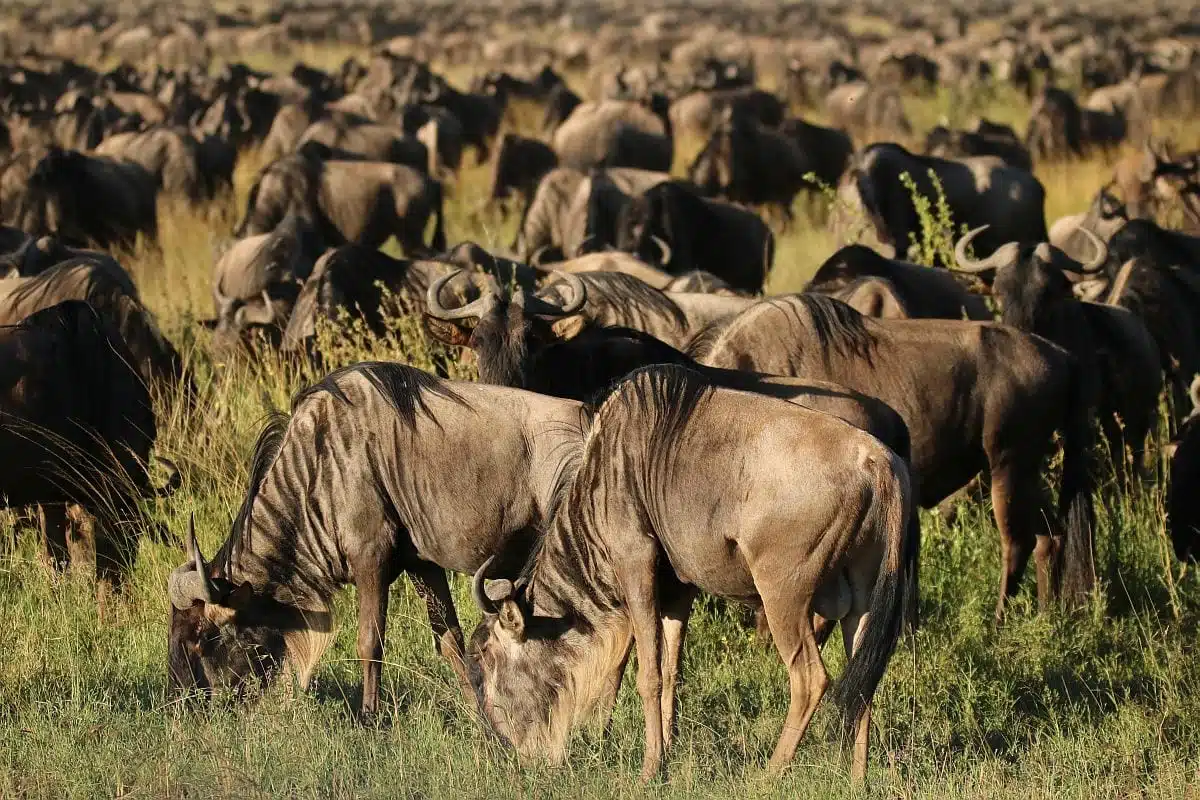
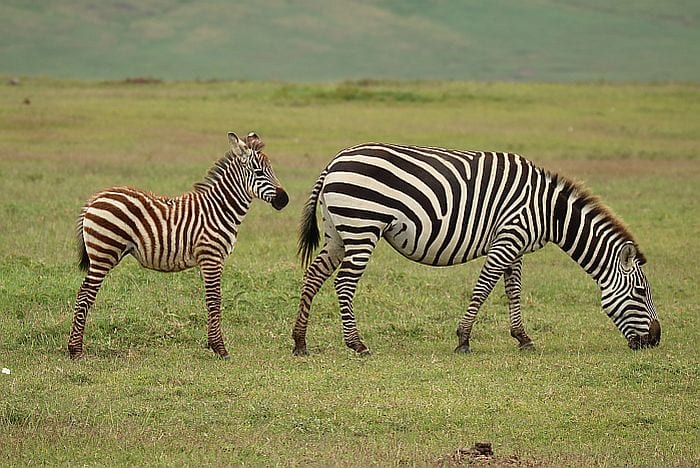
We didn’t see many zebra and wildebeest as they leave in the wet season as the grass is too tall for them. (That’s when they start their migration northwards to the Ngorongoro highlands and the southern Serengeti.) But we saw loads of them later in our trip. However in Tarangire there was still plenty of other game and excellent birding.
We always try to include at least one night here, ideally 2 nights. Then you can stay in the camps within the park itself (Olivers Camp, Little Olivers or Swala) and you can head further south in the park.
If staying one night, there are many camps on the northern border such as Tarangire River Camp. Others lie between Tarangire and Lake Manyara (e.g. Chem Chem) so that you can visit both from one base.
See our website profile of Tarangire River Camp
Tarangire River Camp is a mid-range tented camp with a stunning cliff-top setting with vistas over the river to the park. I wasn’t crazy about this camp but the setting is a winner, especially if you take one of the river-side tents. The honeymoon suite, with spa bath and outdoor shower, is a little extra, if you feel like treating yourself.


Lake Natron
From here we headed north to Lake Natron. What a find for a Tanzania photographic safari! Lake Natron is an interesting combination of both awe-inspiring serenity, wilderness, and adventure. I know that many people are under time pressure and so it may not always be possible to include this area. But if you have time, especially if you like to be active, it is well worth a visit.
There is also a road which takes you from Lake Natron up the Rift valley escarpment and into the northern Serengeti National Park. This is perfect later in the season when the wildebeest migration is in the north of the Serengeti, as you avoid having to drive through the whole park to the north.
I loved this camp and its activities – but it is not for everyone as it is quite rustic. But I felt that they did a great job of getting the mix right between rusticity and traveller comfort.
See our website profile of Lake Natron Camp
At first glance, it looks extraordinary – a little like a series of army mess tents with the camouflage outer Bedouin tents. But this extra shade cover made a noticeable difference to the inner tent temperature, compared to other tents I have experienced in hot African months.
It was hot, but not unbearably so, and there are fans in the tents, right above the bed. (Apparently it is slightly cooler during the safari season (June to October).
I loved the natural swimming pool (even if I never did get used to the cichlid fish nibbling my feet). That was an inspired decision to create it and makes for a very pleasant afternoon of relaxation after a morning of walking.
Activities – great range of activities to suit most people, assuming that you are reasonably fit. This includes walks to the lakeshore to see the flamingos, walks to the hominin footprints and a range of scenic and adventurous walking excursions.

Chat to us
Tell us what you have in mind and we'll craft an itinerary for you, at no obligation
Contact Us NowLake Manyara National Park
We didn’t stay overnight but enjoyed a game drive in the park. The park is not perhaps as good as it was (as the lake has largely silted up). Plus it is sufficiently close to the Ngorongoro area that you can stay there and yet easily enjoy a game drive in Lake Manyara.

But Lake Manyara is a must for keen bird-watchers. For keen birders, we do recommend staying a night IN the park so that you can explore further south into the park and thus into the less busy areas.
Ngorongoro Crater
We then headed to the Ngorongoro Crater area. A reserve which receives a mixed reception from some critics. On the one hand, you are likely to see a lot of wildlife. On the other hand, many people don’t like the crowds of vehicles which are typical of this ultra-popular reserve.
For me, I think it’s all about expectations. Expect to see plenty of other vehicles. Be amused at the human race lined up in a series of vehicles all trying to take the definitive picture of a distant black rhino. Enjoy the majesty of the natural phenomenon of this extinct volcanic crater which is now a wildlife refuge of note.

And – above all – don’t see your Ngorongoro Crater visit as only about the crater. The Ngorongoro highlands are very scenic with an interesting mix of coffee plantations and rural Maasai villages.
Because of its central location, you can easily spend several days here and enjoy both the Ngorongoro Crater, Lake Manyara and also have time to relax at your lodge and do activities there. Depending on the lodge, this could range from coffee plantation tours to horse-riding. Or from scenic hikes to the Olmoti or Empakai craters, to spending time in a Maasai village. You could even visit the Hadza (Bushmen) and Dakota people from here. So a stay of 3 even 4 nights would not go amiss.


Climate – The Ngorongoro Crater was noticeably the coolest place on our whole trip. It gets even cooler in July to October. So you will need to have warm gear for here if you feel the cold. There is much emphasis on fireplaces in the rooms and very little emphasis on swimming pools!
Which Lodge to Choose in the Ngorongoro crater area?
Broadly speaking there are three main options:
If your focus is solely on the Ngorongoro Crater (and you are staying only 1 or 2 nights), then ideally you want to be as close as possible to the Crater. Your choices are somewhat limited to either the more modest options such as Serena or Sopa hotels, the decadent and over the top Ngorongoro Crater Lodge or the Neptune (strange name I know) lodge, which isn’t on the rim, but at the park gates.
See our website profile of Ngorongoro Crater Lodge and Neptune Ngorongoro Luxury Lodge


If you are using the Ngorongoro highlands as a base for a few days, then I would recommend using one of the country lodges which are 30 to 40 minutes’ drive away.
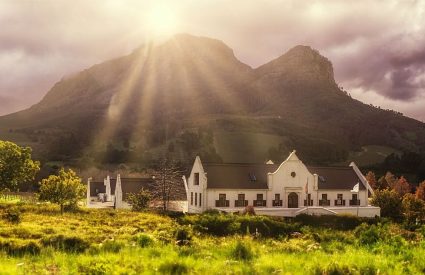
I liked many of these lodges – with the rather colonial Gibbs Farm being my favourite. However your choice probably will be down to a mix of personal taste, how much you want to spend and also, perhaps, the activities available at that lodge.
See our website profile of Gibbs Farm, The Manor at Ngorongoro, and Plantation Lodge
If you are into wilderness, hiking and cultural experiences with the Maasai, there is a third choice which is to stay well into the Ngorongoro Highlands Conservation area, north-east of the Crater. Given the distance to get there I would recommend it for at least 2, if not 3 nights. I didn’t visit this time. But my colleague has so have a look at our website profile of The Highlands
Olduvai Gorge
After our rewarding morning game drive in the Crater, we headed north to the southern Serengeti. En route we broke our journey at the new museum at Olduvai Gorge. This re-imagined museum has been a long time coming. But finally the amazing treasures discovered by Richard Leakey and his team are being displayed to good effect. It is well worth a stop for at least an hour if you have time.